_edited.png)
Why Rain Makes Trenches One of the Most Dangerous Areas on a Construction Site
- pnorris36
- Mar 5
- 2 min read
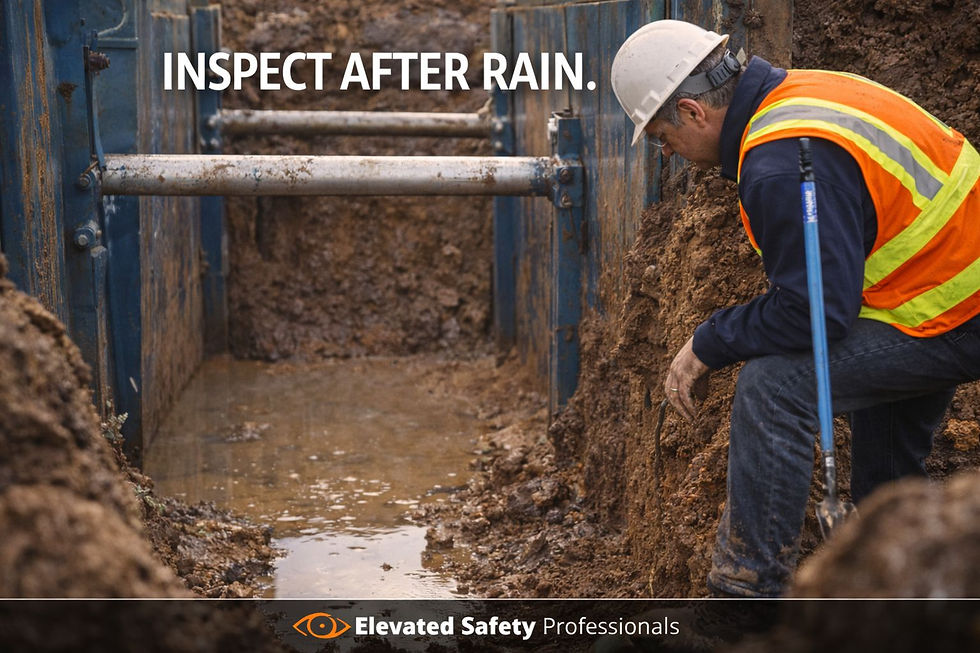
On a construction site, yesterday’s stable trench can quickly become today’s most dangerous work zone.
Rainfall changes soil conditions in ways that are often underestimated. What looked structurally sound the day before can lose stability overnight, dramatically increasing the risk of trench collapse. For crews working in excavations, this shift can be the difference between a routine workday and a life-threatening incident.
Understanding how precipitation affects trench safety is critical for contractors, supervisors, and safety managers responsible for protecting workers on site.
Rainfall and Trench Stability
When rain saturates soil, it alters the soil’s density, cohesion, and load-bearing ability. Water infiltration weakens the structural integrity of trench walls, making them more susceptible to collapse.
According to OSHA regulation 29 CFR 1926.652(a), protective systems must be used in excavations 5 feet deep or greater unless the excavation is made entirely in stable rock.
The challenge is that soil classification can change rapidly after rainfall. Soil that was previously considered stable may shift to a less stable classification once saturated.
This is why trench safety protocols must adapt immediately after weather events.
The Reality of Trench Collapse Risks
Trench collapses remain one of the most fatal incidents in construction. OSHA data consistently shows that these events can occur suddenly, often burying workers under thousands of pounds of soil within seconds.
Unlike many other jobsite hazards, trench collapses rarely provide warning signs. Once a wall gives way, workers may have little to no time to react.
Because of this risk, Letters of Interpretation (LOIs) emphasize that daily trench inspections must be conducted after rainstorms or other conditions that may affect soil stability.
Key Field Safety Measures After Rainfall
After precipitation occurs, excavation sites should never be assumed safe without reassessment. Safety personnel should immediately review conditions and take precautionary steps before work resumes.
Critical checks include:
Re-classify soil conditions: Rain can significantly alter soil composition and stability. Reassessing soil classification ensures the correct protective systems are in place.
Inspect trench boxes and protective systems: Heavy rain can cause trench boxes or shoring systems to shift. These systems must be checked for movement or structural compromise before workers enter the trench.
Verify spoil pile placement: Spoil piles should remain at least 2 feet from the trench edge. Rain can cause spoil material to shift closer to the excavation, increasing the load on trench walls.
Avoid assumptions about stability: One of the most dangerous mistakes on a jobsite is assuming yesterday’s conditions still apply today.
Building a Safer Excavation Environment
Weather-related hazards are often unavoidable, but the risks associated with trenching can be controlled through proper planning, inspections, and adherence to OSHA safety standards.
Proactive safety management, especially following rainfall, can prevent catastrophic incidents and protect workers performing excavation tasks.
Organizations that prioritize trench safety not only meet regulatory requirements but also foster a culture where worker protection is non-negotiable.
Need Support With Construction Safety Compliance?
If your team needs experienced safety staffing, trench safety guidance, or compliance support, professional safety specialists can help ensure your operations meet OSHA requirements while protecting your workforce.
Email: info@elevatedsafetypro.com
Website: https://elevatedsafetypros.com


Comments